

Policy Resources
The Task Force is exploring levy options on highly globalized sectors.
Solidarity levies can raise significant additional revenue, as shown in independent studies commissioned by the Global Solidarity Levies Task Force.




Explore Existing Key Sectors Taxed Domestically
Our interactive Levies Dashboard highlights existing domestic taxes and solidarity levies on aviation, fossil fuels, and financial transactions in countries around the world.
Many countries have taxed these sectors domestically, demonstrating political will and feasibility. However, few have implemented internationally coordinated levies earmarked for global public goods.
This tool aims to track global progress in taxation of key sectors and provide country-level profiles to inform ongoing discussions about global solidarity levies.
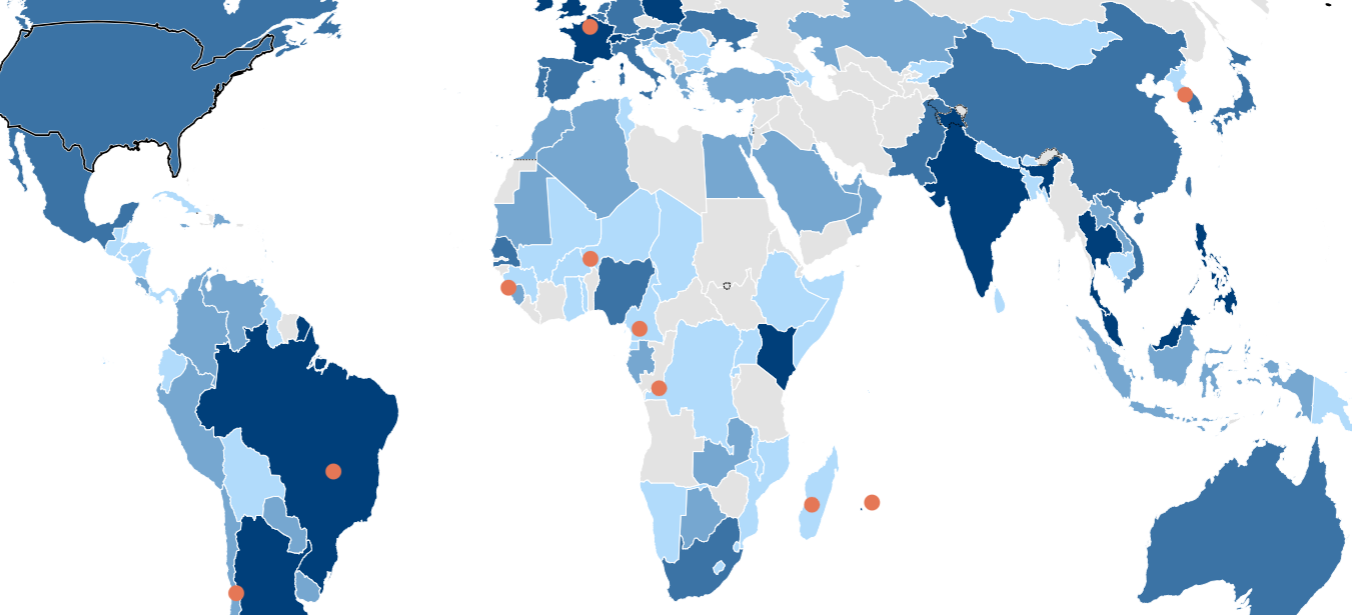
Solidarity Levies Dashboard
Meaningful Action Built on Sound Evidence and Shared Expertise.
The Global Solidarity Levies Task Force conducts cutting-edge consultations and research studies to build the political will and technical expertise necessary for implementing effective solidarity levies.
By bringing together specialists from academia, business, civil society, and government—representing both the Global North and South—we ensure our recommendations are credible, balanced, and grounded in real-world implementation challenges.
Our Flagship Reports:
The Untapped Potential of Solidarity Levies: Recommendations for the Future of Climate and Development Finance
November 2025, COP30
This report provides a comprehensive overview of the leading options for solidarity levies: policies with significant potential to unleash billions in new, debt-free climate and development finance for developing countries.
From Seville to Belém: A Roadmap for Solidarity Levies from FFD4 to COP30
June 2025, FFD4
This report provides a status update of the task force as of the 4th International Conference on Financing for Development (FFD4), which took place in Sevilla in June 2025. The report outlines an overview of the work and progress made by the Task Force since COP29, the sectors they are focusing on implementing solidarity levies, and next steps ahead of COP30.

Scaling Solidarity: Progress on Global Solidarity Levies
November 2024, COP29
This progress report unveils more specific policy options for levies that the task force has investigated since its inception: fossil fuels, aviation, maritime fuel, carbon pricing and financial transactions. It also identifies three additional policy areas for further research, which have significant potential to raise finance equitably while reducing emissions and pollution: a cryptocurrency levy, an ultra-high-net-worth individual tax, and a plastics production levy.
In-Depth Research Papers:

Levies on Premium Flyers: Legal Handbook
November 2025
The Legal Handbook distills comparative experience with aviation taxation from national practices, international legal frameworks, and recent climate-related fiscal innovations. Together, these elements provide a pathway for governments to reach consensus at COP30 and translate commitment into action with the Premium Flyers Solidarity Levy Coalition.
Preview: Impact of Premium Flyer Levies in SIDs and LDCs
November 2025
This study assesses the potential of a Premium Flyers Solidarity Levy as an equitable and predictable source of climate finance, in particular for Small Island Developing States (SIDS) and Least Developed Countries (LDCs). Building on the principles of “polluter pays” and “ability to pay,” the proposed levy targets first- and business-class passengers, representing high-emission, high-income travel segments, to generate dedicated adaptation revenues without significantly affecting demand. The study has been undertaken by Prof. Mizan Khan, Ayesha Noor & Ekhtekharul Islam, and the full publication is forthcoming in 2026.
Towards a Crypto Solidarity Levy
November 2025
The Global Solidarity Levy Task Force set up an International Expert Commission on Crypto Asset Levies for Climate & Development (expert commission). The question which the Task Force has set out to explore through this expert group is whether a levy imposed on the crypto ecosystem could be devised with the purpose of promoting climate, fiscal justice, and/or development.
Taxing Polluters: What is the Impact of a Global Minimum Tax on the Extractive Sector
September 2025
This new report commissioned by the Global Solidarity Levies Task Force, assesses the potential and limitations of applying the OECD / G20 global minimum tax (Pillar Two) to the extractive sector, a high-profit and high-emission industry at the center of climate and development debates.
A Practical Negotiation Framework to Finance the Low Carbon Transition and Development
June 2025
This article argues that it is still possible to make meaningful climate and development progress by designing targeted global solidarity levies. This article first proposes a structured theoretical framework and process for practical negotiations to form a climate club, with a focus on the aviation sector. It then presents the early-release of a robust quantitative tool—a technical simulator of the levy’s operation—to allow participants to evaluate potential revenue outcomes, sensitivity to policy parameters, and fair redistribution mechanisms.

A Fair Share from Aviation
June 2025
At the request of the Task Force, CE Delft conducted an impact assessment of the aviation levies, currently under development by the Task Force. The levies are assessed in different regimes (rates, geographical scope).

The Case for a Green Financial Transaction Tax
November 2025
The aim of this note is to assess whether and how the Financial Transaction Tax (FTT) could be “greened” – that is, adapted or utilized to support environmental objectives and the financing of the transition to a more sustainable economy. While traditionally conceived as a regulatory tool, the FTT also holds unexploited potential as an instrument for climate finance and broader environmental alignment.
Levies on Equity Transactions to Finance Climate Action
June 2025
Financial Transactions Taxes (FTTs) on equity trading, already implemented in several countries and generating around $17 billion annually, represent an underutilised but promising revenue stream for climate development and action. The study highlights the FTT as a technically feasible, low-cost, and non-distortive mechanism to raise climate finance quickly and effectively, fulfilling the criteria sought by Task Force and offering a practical path forward in the broader effort to scale up international development and climate funding.
Global Financial Architecture Reform and Solidarity Levies
February 2025
This brochure provides a brief overview of solidarity levies and how they can help fund climate and development.
Consultations
In 2025, the Task Force secretariat ran three public consultations. The results and background information can be found below. All three of these consultations are closed and concluded entirely.
In January 2025, the Secretariat of the Global Solidarity Levies Task Force opened a consultation on strawman options for solidarity levies. The consultation document outlined 16 strawman options for solidarity levies: 4 on aviation, 1 on shipping, 1 on financial transactions, 3 on cryptocurrencies, 3 on fossil fuels, 1 on plastic polymers, 2 on carbon pricing, and 1 on high-net-worth individuals.

Learn More

Learn More
In July 2025, the GSLTF Secretariat opened a public consultation on a set of 10 draft principles, designed to inform deliberations among governments on the use of the revenues raised from the GSLTF’s first coalition of the willing, the Premium Flyers Solidarity Coalition.
In August 2025, the GSLTF Secretariat opened a consultation on potential mechanisms that can manage financial flows of revenues from solidarity levies to low income and vulnerable countries for climate and development purposes in a manner that is efficient, equitable, and accountable. The Call for Proposals received interest from a range of stakeholders, including some that appear ready to quickly implement operational solutions. Out of the 15 submissions received, 11 were made with permission to publish on the Task Force website.

Learn More
FAQ
Get clear answers on what solidarity levies are, how they are designed, and why they matter for climate and development goals.
Stay up to date
Sign up to our newsletter to keep up to date with the latest from Global Solidarity Levies Task Force